


This is a chapter from my new cultural history, American Pop: How Music Shaped the 1960s, part of the bestselling American Pop series. Rather than a standard biography, this book explores how Elvis Presley became the prototype for modern fame and why his image still shapes America’s imagination.
The book is available now for free on Kindle Unlimited or for $3.99.
On February 7, 1964, Pan American Airways Flight 101 from London touched down at New York's newly renamed Kennedy Airport. As the aircraft taxied to a stop, four young men from Liverpool peered through the windows at more than three thousand screaming fans pressed against the terminal's observation deck, many holding signs that proclaimed variations of "I Love You Beatles!" When John Lennon, Paul McCartney, George Harrison, and Ringo Starr descended the airplane steps, they faced what United Press International reporter Wilbur Martin called "mass hysteria choreographed for television." Over seven hundred journalists documented their arrival, while police struggled to contain crowds behind hastily assembled barricades. This carefully orchestrated media spectacle marked not merely a band's first American appearance but the opening salvo of a cultural revolution that would transform music, fashion, business, and generational identity across the United States. The British Invasion had begun.

The Beatles arriving at Kennedy Airport on February 7, 1964, looking up at the crowds of screaming fans. This carefully orchestrated media event marked the official beginning of the British Invasion, with John, Paul, George, and Ringo facing what one reporter called 'mass hysteria choreographed for television' as over 700 journalists documented their arrival.
Though American teenagers' explosive response to British music appeared sudden, the invasion had been methodically prepared through months of promotion, publicity, and commercial positioning. Capitol Records, which had initially rejected the Beatles' early singles, reversed course after witnessing their British success, investing an unprecedented $50,000 in marketing for their American launch. This campaign, combined with strategic television bookings and radio airplay, created conditions for a cultural phenomenon that transcended mere musical preference. The British Invasion represented a multidimensional transformation of American popular culture—from sound and fashion to attitude and artistic ambition. It simultaneously reflected existing American cultural tensions and catalyzed new directions that would reshape the decade.
The Beatles' Arrival and Cultural Earthquake
Three days after their airport arrival, the Beatles performed on "The Ed Sullivan Show" to an estimated television audience of 73 million viewers—approximately 40 percent of the American population. CBS received more than 50,000 ticket requests for the 728-seat studio. The broadcast registered the lowest crime rate for any Sunday evening in American history, as potential criminals apparently joined the rest of the nation in witnessing this cultural turning point. Sullivan's simple introduction—"Ladies and gentlemen, the Beatles!"—preceded an opening performance of "All My Loving" that, in the words of television historian Robert Thompson, "divided American popular culture into what came before and what came after, as definitively as the birth of Christ divides historical chronology."
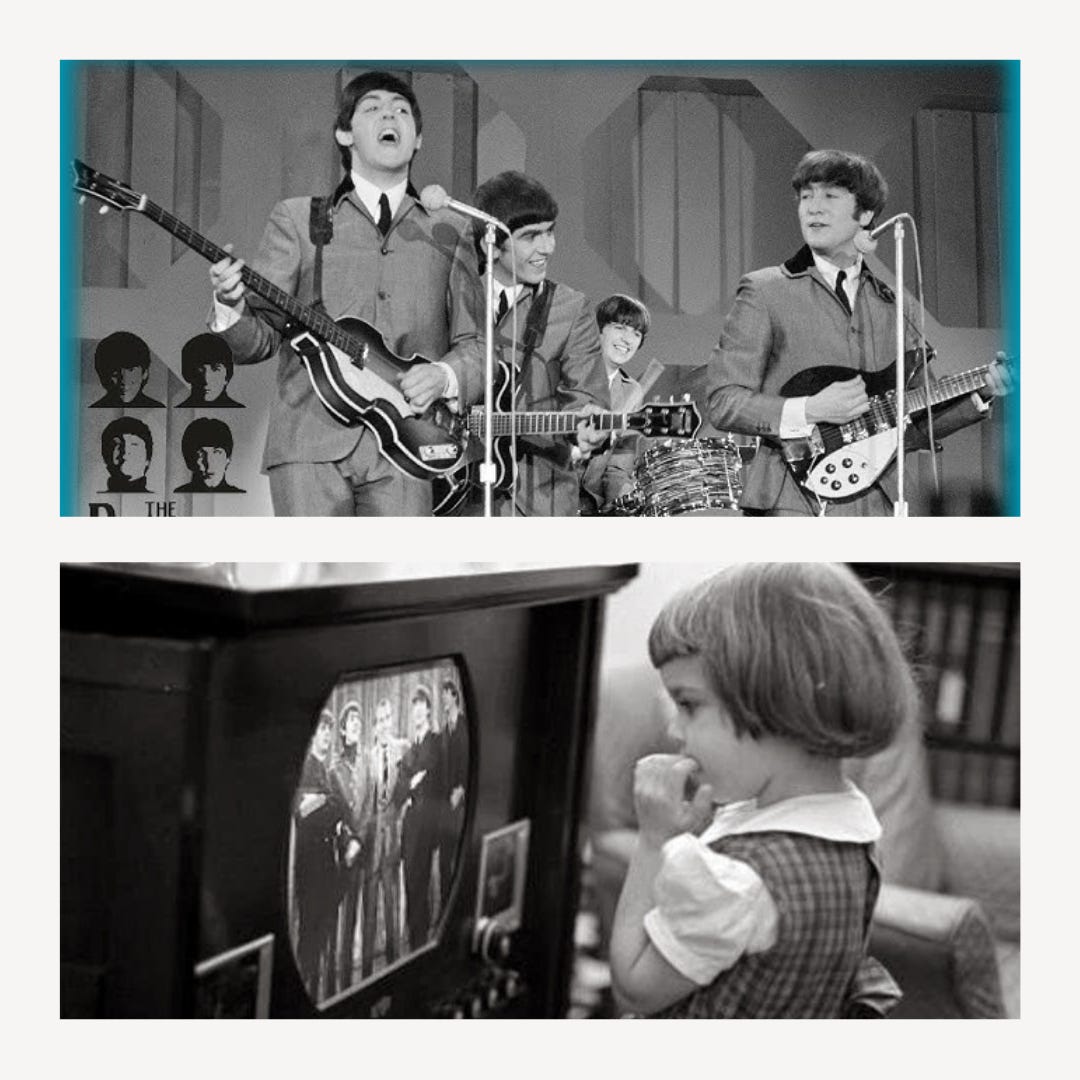
Top - The band performing in their matching suits with their distinctive instruments and hairstyles; Bottom - A young American girl watching transfixed on her family television set, representing the 73 million viewers—approximately 40 percent of the American population—who witnessed this cultural watershed moment.
The Beatles' early American popularity built upon connections to familiar rock and roll traditions while introducing crucial innovations. Their initial American singles—"I Want to Hold Your Hand," "She Loves You," and "Please Please Me"—featured recognizable elements from 1950s rock: danceable rhythms, concise song structures, and romantic teenage themes. However, these superficial similarities masked significant musicological innovations. The group's sophisticated chord progressions, unusual harmonic structures, and distinct vocal arrangements—particularly their use of two and three-part harmonies with varied vocal timbres—created sounds that expanded rock's musical vocabulary. Their original compositions departed from blues-based progressions that had dominated American rock, incorporating influences from British music hall traditions, early Motown, and their Hamburg-honed performance dynamics.
The band's visual presentation proved equally revolutionary. Their distinctive hairstyles—collar-length "moptops" with bangs swept forward—became both their trademark and a cultural battleground. Within months, barbershops across America reported dramatic business declines as young men grew their hair in Beatles-inspired fashion, prompting school board meetings, editorial cartoons, and even state legislative debates about appropriate male appearance. Their matching suits and boots, styled by manager Brian Epstein to replace their earlier Hamburg leather look, created a unified group identity that challenged American notions of individual stardom. Above all, their presentation emphasized a collective joy and camaraderie rarely seen in American performers. When Ed Sullivan followed their performance with the announcement they would return next week, the studio erupted with screams that suggested something beyond mere fandom had taken hold in American youth culture.
While the Beatles conquered America, their management and record label capitalized on enthusiasm through unprecedented merchandising. By April 1964, over 50 million dollars' worth of Beatles products had been sold, including wigs, t-shirts, dolls, lunchboxes, and candy. This commercial juggernaut represented a transformation in how musical artists were marketed, creating models for integrated entertainment merchandising that persist today. The phenomenon reached its apex when, on April 4, 1964, the Beatles occupied the top five positions on Billboard's Hot 100 singles chart simultaneously—a feat never equaled before or since—while simultaneously holding the top two album positions.
These metrics reflected more than commercial success; they demonstrated the Beatles' singular ability to unite a youth market typically fragmented by regional and demographic differences. Their breakthrough coincided with the first year baby boomers reached high school in significant numbers, providing a generational soundtrack that transcended previous market divisions. When Newsweek published its infamous February article dismissing the group's music as "a near disaster" and predicting they would quickly fade from popularity, the magazine underestimated not just the Beatles' talent but their resonance with fundamental social shifts already underway in American society.
The Rolling Stones and the Bad Boy Alternative
In June 1964, while Beatlemania still dominated American popular culture, a significantly different British group arrived for their first U.S. tour. The Rolling Stones had deliberately cultivated an image in direct opposition to the Beatles' cheerful accessibility. Where the Beatles wore matching suits, the Stones dressed in individual, slightly disheveled styles. While the Beatles charmed reporters with witty banter, the Stones projected sullen indifference or outright hostility. Their music similarly provided a rawer, blues-based alternative to the Beatles' melodic pop approach. This contrasting presentation was no accident but a strategic positioning that both Andrew Loog Oldham, the Stones' manager, and Brian Epstein, the Beatles' manager, encouraged to create complementary rather than competitive market positions.
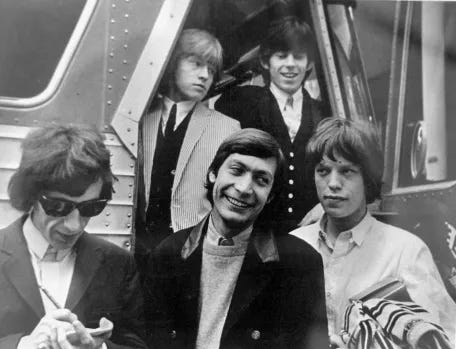
The Rolling Stones arriving for their first American tour in June 1964. Their deliberately disheveled appearance, individual styling, and more confrontational demeanor provided a strategic counterpoint to the Beatles' clean-cut image, establishing what music historian Simon Frith called 'rock's oppositional stance' that would influence generations of musicians.
The Stones' first American single, "Not Fade Away," reached only number 48 on U.S. charts, but their first national television appearance on Dean Martin's Hollywood Palace variety show on June 20, 1964, established their cultural position. Martin introduced them with undisguised contempt, joking, "Aren't they great? Just singing their hearts out... they're going to leave soon to get haircuts." This hostility from an establishment entertainer perfectly served the Stones' developing persona. Their performance of Buddy Holly's "Not Fade Away," transformed through their distinctive rhythm approach, highlighted their musical connection to American blues and early rock traditions. While the Beatles had adapted and polished these influences, the Stones emphasized raw emotional intensity and rhythmic drive that connected more directly to rock's blues origins.
The Stones' early American tours featured smaller venues than the Beatles, with notably different audience responses. Rather than the relentless screaming that drowned out Beatles performances, Stones concerts generated a tenser atmosphere with greater male attendance and occasional confrontations with authority. When police stopped a July 1964 performance in Lynn, Massachusetts after just four songs due to audience behavior, the incident reinforced the group's dangerous image. Their breakthrough American hit, "Time Is On My Side," reached the Top Ten in November 1964, establishing a commercial foothold through a sound distinctly different from British Invasion contemporaries, with Mick Jagger's vocals emphasizing blues inflections and sexual undertones absent from most pop hits.
By consciously positioning themselves as anti-Beatles, the Rolling Stones created a template for what music historian Simon Frith termed "rock's oppositional stance"—the idea that authentic rock music should challenge rather than accommodate mainstream values. This positioning provided American youth culture with greater choice than simply accepting or rejecting British music; teenagers could now align themselves with different approaches to rebellion, from the Beatles' playful challenge to adult conventions to the Stones' more confrontational stance. The dichotomy oversimplified both bands' actual complexities but created a cultural framework that would influence rock music's subsequent development.
The Stones' early repertoire leaned heavily on American rhythm and blues covers, including songs by Chuck Berry, Willie Dixon, and Solomon Burke. Through these interpretations, they paradoxically introduced many white American teenagers to Black American musical traditions they had previously overlooked. The group's reverence for these sources, combined with their success in recontextualizing them for mainstream audiences, highlighted how British Invasion bands often functioned as cultural translators, reintroducing elements of American musical heritage through a foreign filter. The Stones' version of "Little Red Rooster," a traditional blues song associated with Howlin' Wolf, reached number one in Britain but remained primarily an album track in America, suggesting different levels of blues acceptance between the two markets.
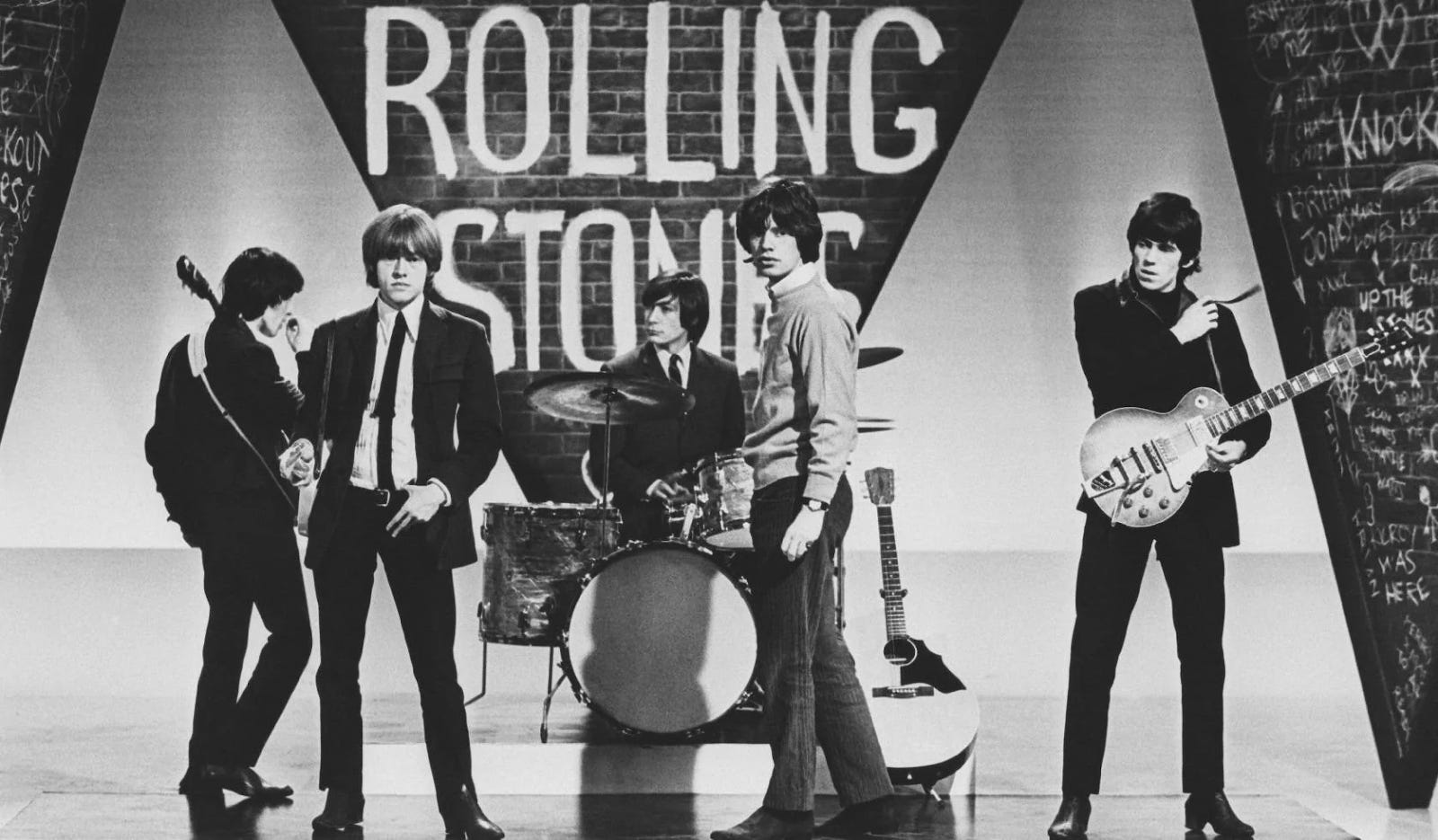
By 1965, the Rolling Stones had secured their position as the darker alternative within the British Invasion through hits like "The Last Time" and "Satisfaction." The latter, with its distorted guitar riff and overtly frustrated lyrics, topped American charts for four weeks in summer 1965, confirming the commercial viability of their more aggressive approach. Their success demonstrated that the British Invasion contained sufficient variety to accommodate multiple artistic directions and audience preferences, creating conditions for the wider range of British acts that would soon follow.
The British Sound: From the Kinks to the Who
While the Beatles and Rolling Stones established the initial parameters of the British Invasion, dozens of additional British groups entered the American market between 1964 and 1966, each contributing distinctive elements to what Americans perceived as "the British sound." This diverse wave included bands that had developed in separate regional scenes across Britain, from the Merseybeat sound of Liverpool (Gerry and the Pacemakers, Billy J. Kramer) to London's blues clubs (the Yardbirds, the Animals) to the broader pop landscape (the Dave Clark Five, Herman's Hermits). Despite their differences, these groups collectively transformed American popular music through several shared characteristics that distinguished them from domestic competitors.
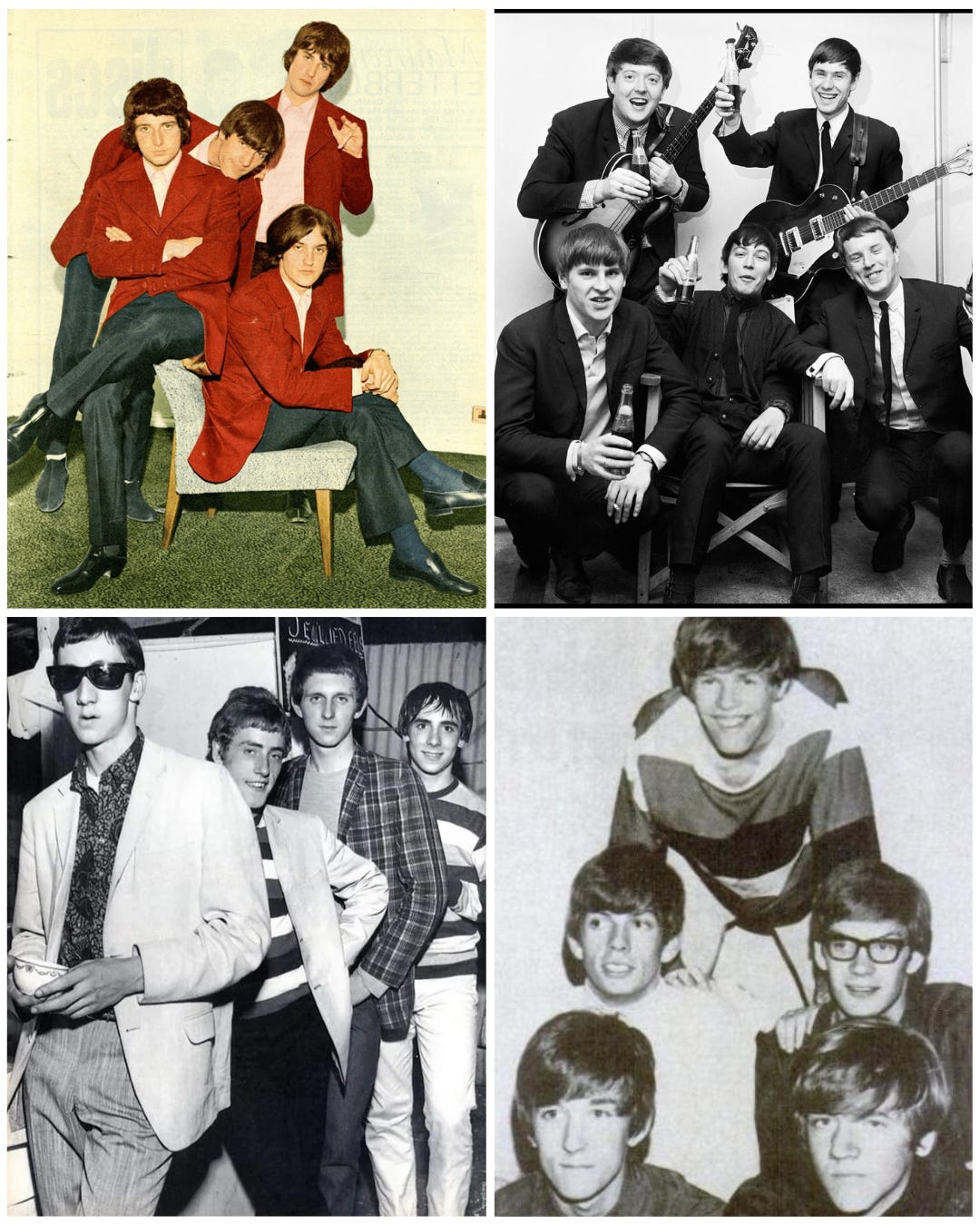
Top Left - The Kinks with their signature red hunting jackets; Top Right - The Animals with their working-class Newcastle roots; Bottom Left - The Who with their mod-influenced fashion; Bottom Right - Herman's Hermits representing the more pop-oriented, clean-cut side of the invasion that appealed to younger mainstream audiences.
The Kinks exemplified how British bands could combine American influences into distinctive new forms. Their breakthrough hit "You Really Got Me," which reached number seven on American charts in 1964, featured a distorted power chord riff created when guitarist Dave Davies sliced his amplifier's speaker cone with a razor blade. This deliberate distortion, combined with Ray Davies' aggressive vocals and the song's simplified chord structure, created a proto-hard rock sound that influenced countless subsequent bands. The Kinks' early American performances highlighted their distinctive matching red hunting jackets and Ray Davies' theatrical performance style, elements emerging from London's fashion-conscious mod scene rather than American rock traditions.
Similarly, the Animals brought regional British characteristics to American audiences. Emerging from Newcastle's industrial working-class environment, the group centered around Eric Burdon's gritty vocals and Alan Price's distinctive organ work. Their interpretation of the traditional folk song "House of the Rising Sun," which topped U.S. charts for three weeks in summer 1964, demonstrated how British bands could transform American source material through distinctive arrangement and instrumentation. The Animals' subsequent hits, including "Don't Let Me Be Misunderstood" and "We Gotta Get Out of This Place," maintained this approach of applying British sensibilities to American musical forms, creating what cultural critic Greil Marcus called "familiar music made foreign, then returned transformed."
The Who represented yet another distinctive British approach through their connections to mod subculture and art school influences. Their early American releases, including "I Can't Explain" and "Anyway, Anyhow, Anywhere," featured Roger Daltrey's stuttering vocals, Pete Townshend's power chords and feedback experimentation, and a rhythm section that played with unusual aggression for pop records. The group's visual presentation, including Townshend's windmill guitar technique and their eventual instrument destruction, communicated intensity that transcended language barriers. Though achieving less immediate American success than some contemporaries, their influence on subsequent garage rock and proto-punk bands proved substantial.
The invasion's pop-oriented acts demonstrated equal cultural significance despite sometimes being dismissed by rock historians. Herman's Hermits, fronted by the boyish Peter Noone, scored ten Top Ten singles between 1964 and 1967, including "I'm Into Something Good" and "Mrs. Brown, You've Got a Lovely Daughter." The latter's exaggerated Manchester accent represented a significant reversal of earlier patterns where British singers had typically suppressed regional accents to sound more American. Similarly, the Dave Clark Five achieved eight Top Ten hits through a polished sound featuring prominent saxophone and Mike Smith's powerful vocals. These commercially successful groups created entry points for many younger listeners, expanding the British Invasion's audience beyond hip urban centers to mainstream suburban America.
Several production and arrangement characteristics united these diverse acts into what Americans recognized as distinctively British. Engineers and producers including George Martin (Beatles), Shel Talmy (Kinks, Who), and Mickie Most (Animals, Herman's Hermits) developed techniques emphasizing clearer separation between instruments, greater attention to vocal harmonies, and more varied dynamics than typical American recordings of the period. British bands also typically maintained core personnel rather than employing session musicians, creating distinctive group sounds that audiences could identify across multiple records. These production approaches influenced American recording techniques as labels sought to capture similar sonic characteristics.
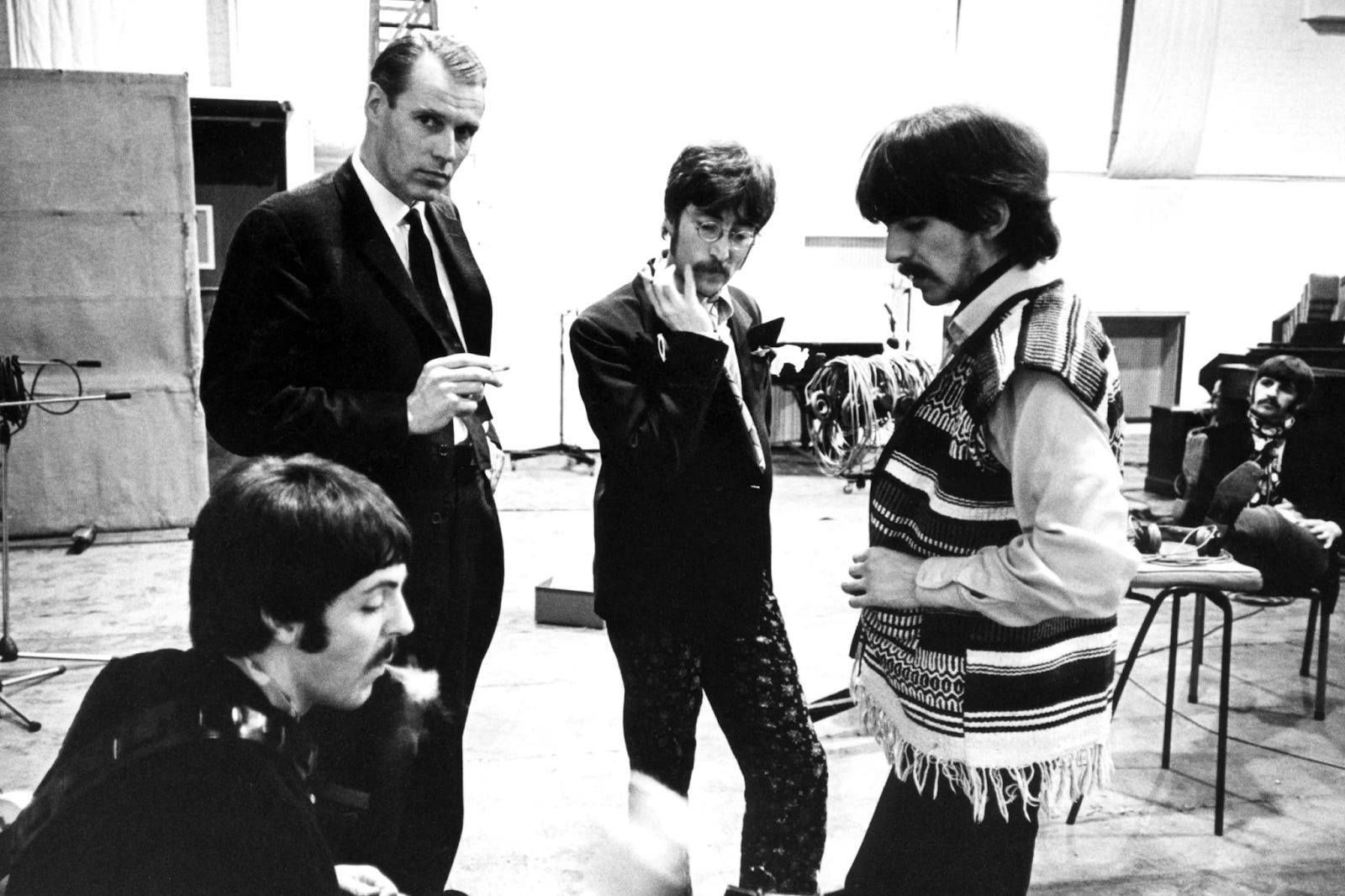
Beatles producer George Martin (standing top left) with the band in a recording studio. British producers like Martin, Shel Talmy, and Mickie Most developed distinctive recording techniques featuring clearer separation between instruments, more focused vocal harmonies, and varied dynamics that revolutionized recording practices on both sides of the Atlantic.
The British Invasion's second wave included acts that further expanded the movement's stylistic range. The Yardbirds, whose rotating lead guitarists included Eric Clapton, Jeff Beck, and Jimmy Page, pushed electric guitar techniques through songs like "For Your Love" and "Heart Full of Soul," incorporating Eastern influences and experimental sounds that would influence psychedelic development. Manfred Mann combined jazz elements with pop structures in hits like "Do Wah Diddy Diddy." The Zombies contributed sophisticated jazz-influenced harmonies and keyboard-centered arrangements through songs like "She's Not There." Each group added distinctive elements to American perceptions of British music while finding receptive audiences prepared by the initial invasion's breakthrough.
Transatlantic Cross-Pollination in Sound and Style
The British Invasion represented not a one-way cultural export but a complex exchange that created feedback loops of influence between British and American musicians. British artists had initially developed their styles through intensive study of American records—particularly blues, R&B, and early rock and roll—often demonstrating deeper appreciation for these traditions than mainstream American audiences. When these British interpretations achieved American success, they sparked renewed interest in their original inspirations. This circular pattern of influence accelerated creative development on both sides of the Atlantic while breaking down previously rigid market segregations in American music.
The clearest example of this cross-pollination appeared in blues music. British groups including the Rolling Stones, the Animals, and the Yardbirds had studied American blues records with scholarly devotion despite limited access to original materials. When these bands toured America, they often insisted on meeting their blues heroes, many of whom had been relegated to small clubs or had stopped performing entirely. Chicago blues pioneer Muddy Waters experienced a career resurgence after British musicians consistently cited him as a primary influence and sought collaborations. Chess Records, the premier Chicago blues label, released "Muddy Waters: The Folk Singer" in 1964 specifically to capitalize on British-generated interest. This pattern repeated across blues communities as British enthusiasm helped redirect American attention to overlooked musical traditions.
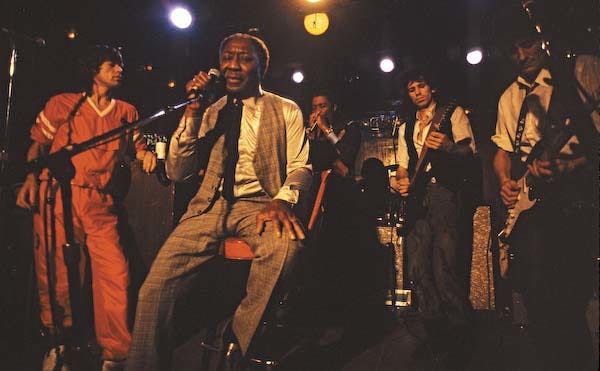
Muddy Waters performing with the Rolling Stones, exemplifying the cross-pollination between American blues originators and British interpreters. Waters experienced a career resurgence after British Invasion bands like the Rolling Stones consistently cited him as a primary influence, demonstrating how British musicians helped reintroduce overlooked American musical traditions to American audiences.
Fashion provided another arena for transatlantic exchange. British bands arrived wearing styles influenced by London's mod subculture, featuring slimmer silhouettes, higher collars, and Chelsea boots that contrasted with American teenagers' typical casual wear. These looks spread rapidly across American youth culture, with department stores creating "British Invasion" sections featuring Union Jack motifs and mod-inspired designs. Simultaneously, British musicians absorbed American influences, particularly from Black American performance traditions, creating hybrid styles that cycled back to influence American fashion. Hair length became the most visible battlefield in this exchange, with the Beatles' relatively modest moptops evolving toward the significantly longer styles sported by bands like the Kinks and the Pretty Things, directly challenging American masculine norms and school dress codes.
American garage bands represented perhaps the most significant response to British influence. Throughout 1964-66, thousands of amateur groups formed in suburban communities across America, directly inspired by the British Invasion's energy and accessibility. Bands like the Kingsmen ("Louie Louie"), the Standells ("Dirty Water"), and the Seeds ("Pushin' Too Hard") combined British Invasion influences with distinctly American regional characteristics, creating what music historian Richie Unterberger termed "the first truly American response to the British Invasion." These bands typically lacked their British counterparts' formal sophistication but compensated through raw energy and local authenticity. Their proliferation demonstrated how thoroughly British groups had transformed American youth's relationship with music creation, making active participation seem possible even without extensive training.
Folk rock emerged as another direct response to British influence, particularly after the Byrds adapted Bob Dylan's "Mr. Tambourine Man" through arrangements clearly influenced by the Beatles' sound. The resulting hybrid—released in April 1965 and topping American charts by June—married folk's lyrical substance with British-influenced instrumentation and production. The Beatles, who had themselves been influenced by American folk through Dylan, completed the circle by incorporating increasingly folk-influenced elements in their own compositions. This dialogue between folk and rock traditions, facilitated by British intermediaries, permanently altered both genres while creating new artistic possibilities through synthesis.
The business of music experienced equally profound transformation through British influence. The success of self-contained groups who wrote their own material—particularly the Beatles—challenged the dominant Brill Building system where professional songwriters provided material for performers. Record production shifted toward greater artist involvement and more distinctive sonic identities rather than standardized approaches. Album artwork evolved from simple promotional portraits to more conceptual designs expressing artistic identity, exemplified by the Beatles' "Rubber Soul" cover and its many imitators. These business innovations, combined with the music's artistic evolution, accelerated rock's development as a form increasingly taken seriously by critics and adult audiences.
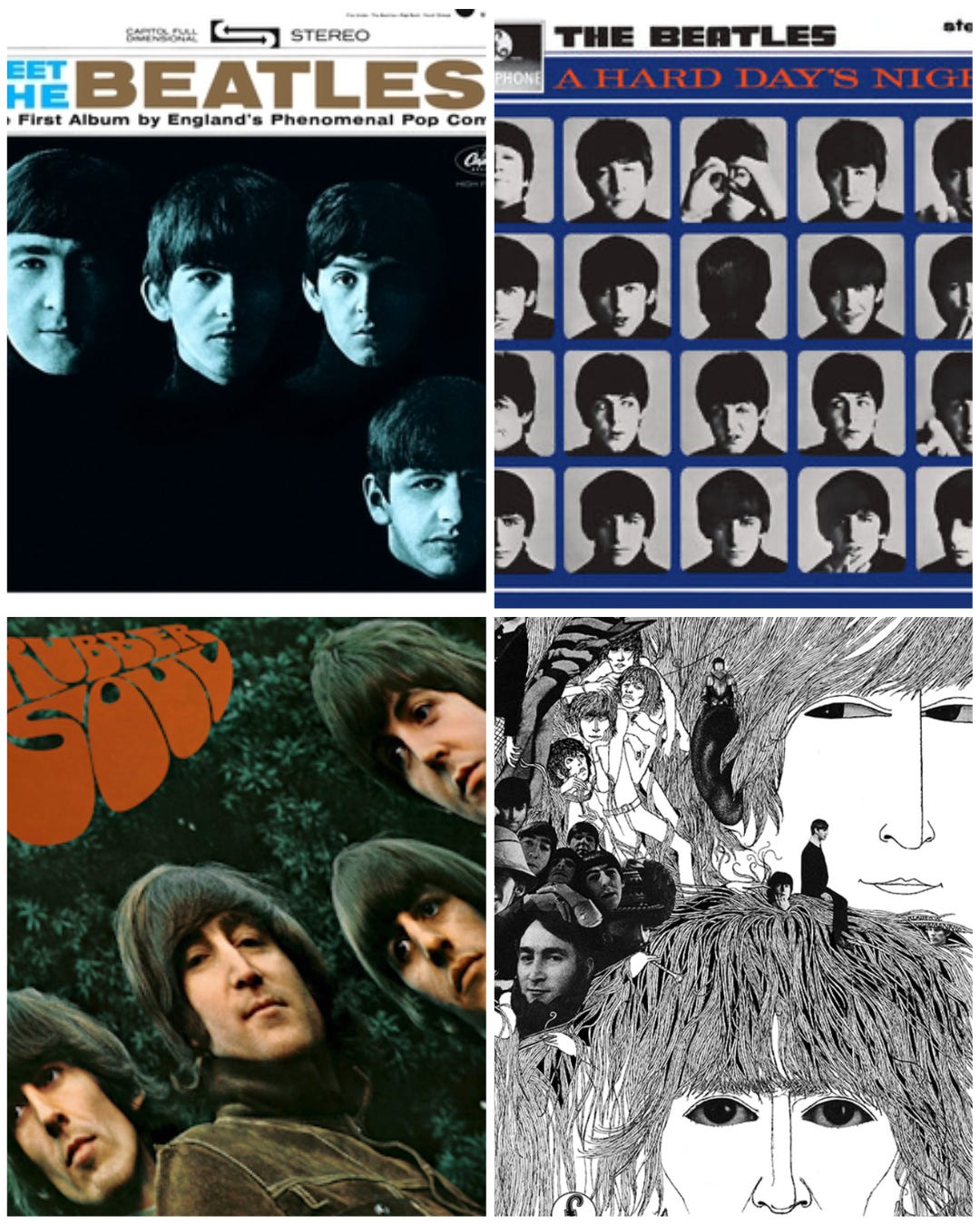
Top Left - The simple portrait format of 'Meet The Beatles'; Top Right - The more stylized photography of 'A Hard Day's Night'; Bottom Left - The more sophisticated natural setting of 'Rubber Soul'; Bottom Right - The conceptual artwork of 'Revolver.' This visual progression illustrates how album design evolved from promotional tool to artistic expression during the British Invasion.
By 1966, the clear distinctions between British and American music had begun dissolving into a more integrated transatlantic rock culture. American groups like the Lovin' Spoonful and the Mamas and the Papas achieved success with approaches that incorporated British influences while maintaining distinctive American characteristics. Meanwhile, British bands increasingly expanded beyond straightforward pop into more experimental directions. This convergence did not represent the invasion's end but its successful integration into a transformed musical landscape. The movement that had arrived so dramatically on February 7, 1964, had within three years completely restructured American popular music's sound, presentation, and cultural significance.
The story of the British Invasion demonstrates how thoroughly external perspectives can transform cultural traditions by reinterpreting and reintroducing them to their country of origin. These British musicians, approaching American musical forms with both reverence and creative freedom, catalyzed changes that domestic artists alone might never have accomplished. By temporarily disrupting established American industry patterns, they created openings for new approaches that would ultimately benefit musicians on both sides of the Atlantic. The resulting dialogue between British and American traditions generated creative ferment that would continue influencing popular music long after the invasion's initial wave had receded.